Push to boost cervical screening
While data shows current cervical screening rates for women aged 25-69 years old in Otago and Southland is continuing to improve, there’s more to be done. This week HPV Awareness Day is on March 4, a good time to encourage cervical screening.
WellSouth, the Primary Health Organisation (PHO) for Southland and Otago, works with community providers to break down barriers to accessing important screening services.
The National Cervical Screening Program (NCSP) data shows that, overall, screening coverage in Southern for women aged 25-69 years old continues to rise with 79% of the eligible population screened in January 2026, compared to 73% in January 2024 and 77% in January 2025. Of these, 74% of Māori participants are up to date with screening and Pacific are slightly higher at 80%.
Cervical cancer is one of the most preventable cancers in Aotearoa. Around 180 women and people with a cervix are diagnosed with cervical cancer each year in New Zealand. Approximately 60 lose their lives to the disease and of these people roughly 85% have either never been screened or are not up-to-date with their regular screenings.
WellSouth Health Promotion Coordinator Ms Paula Hedges says early detection can save lives.
“We work directly in the community as well as with Hauora Māori, Pacific and other community providers to reach high needs Southerners, with support that is culturally appropriate, accessible and fosters equitable outcomes.”
WellSouth facilitates and supports outreach services, including community-based clinicians to provide screening in settings where people feel most comfortable. This includes supporting providers to offer self-swabs opportunistically and through dedicated screening clinics and events and partnering with local screeners and the Health New Zealand national cervical screening team.
It has been over 2 years since New Zealand transitioned to primary HPV testing, with the introduction of self-swab option, allowing eligible participants to take their own sample.
Ms Hedges says this has been shown to increase participation, particularly among those who have previously faced barriers to screening.
“Self-swabbing is a safe, and is as reliable as clinician-taken smear samples for HPV testing. It offers greater privacy, comfort, and convenience which are key factors for people who may have delayed or avoided screening due to whakamā-embarrassment, past trauma, time constraints, or difficulty accessing services,” says Ms Hedges.
“I would like to encourage anyone who may be overdue for screening to contact their general practice or local Hauora Māori or Pacific community provider and talk through the options.”
Regular screening can prevent most cases by detecting high-risk human papillomavirus (HPV) early, before cancer develops. Anyone with a cervix aged 25–69 who has ever been sexually active should be screened every five years with an HPV test.
Information about the HPV vaccine
-
It is highly effective at preventing infection from the nine HPV types responsible for around 90% of HPV-related cancers.
-
In Aotearoa, the vaccine is free for youth-rangatahi aged 9 to 26 years and many children-tamariki are offered the free vaccine at school, typically in Year 7 or 8, and it is also available through their primary care provider.
-
Cervical cancer is the most common cancer caused by HPV.
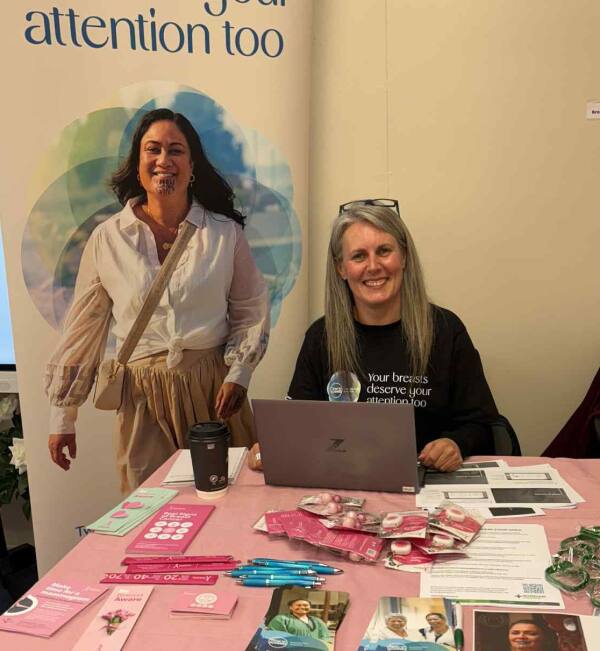
Health Promotion Coordinator Paula Hedges at a health event promoting screening.