Southern screening rates are up
Cervical screening rates for our Southern Māori and Pacific communities have increased 10% compared to last year, due to collaborative efforts between WellSouth and community healthcare providers in Otago and Southland.
WellSouth, the primary health organisation (PHO) for Otago and Southland looks to close the equity gap even further after being given the contract for the Support to Screen Services (SSS) Southern Region. This involves working in partnership to improve screening access and outcomes for Māori and Pacific Island wāhine within the Southern region to address the equity gap in screening coverage.
WellSouth’s cervical screening data dashboards track all rates over time based on the National Cervical Screening Program (NCSP) register. Data at 10 September, 2025, shows the current cervical screening rates for women aged 25-69 years old in Otago and Southland is improving. About 61% of Pacific participants are up to date on screening. And Māori are slightly higher at around 64%. Data shows Pacific women experience the greatest disparity; about 13% have never been screened.
WellSouth Cervical Screening Dashboard with NCSP data, as at 10 September 2025 pictured below
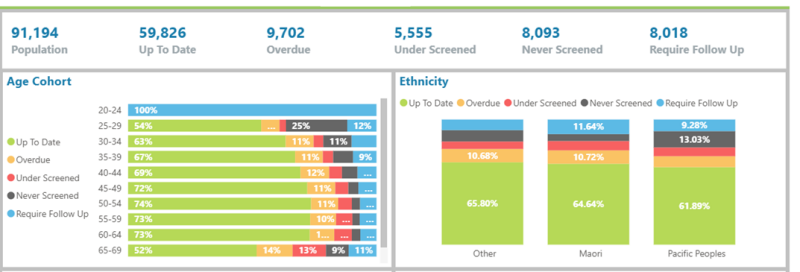
Overall screening coverage continues to rise with 74.5 per cent of the eligible population screened nationally in July 2025, compared to 70 per cent in July 2024.
WellSouth Pou Haumanu Māori - Clinical Advisor Māori Dr Miriama Ketu-McKenzie says the results are heartening.
“The steady increase is great news and we need to keep momentum up. This time last year, data from the register showed that in Otago and Southland only 50% of Pasifika wāhine were up to date on their screening and approximately 16% had never been screened at all. Screening rates in Māori participants were at around 58% with a further 10% due for follow up, so almost a third were either overdue, under-screened or were never screened at all.”
“These aren’t just stats,” says Dr Ketu-McKenzie.
“These figures represent hundreds of our Pacific and Māori mums, sisters, aunties and daughters who are at risk of getting cervical cancer.”
Nationally, data shows that around 85% of the 180 people who get cervical cancer in Aotearoa New Zealand every year, have either never been screened or have not had regular screening (over-due and under screened).
“Over the last year, through the collaborative efforts between WellSouth, NCSP and the community healthcare providers, we have held dedicated events for participants to get screened on the spot or create opportunities and pathways to do so. This has made a huge difference,” says Dr Ketu-McKenzie.
“We are not only working together to create accessible opportunities such as Moana Lei Pink events at Pacific providers and Hauora Days at Marae, but there have been sustained efforts to contact Māori and Pacific participants to talk about their choices and support them to get screened, from both organisations.”
“In addition, the self-test has been a game-changer, particularly as more participants become aware of its availability.”
Since its launch, 81% of participants being screened have opted to self-test.
Deborah Kay-Corkin, Health New Zealand Unit Manager for the National Cervical Screening Programme in Southern says these significant outcomes are a result of all the work being delivered by sample-takers in primary and community care, screening support services, NCSP regional coordination teams, laboratories, colposcopy teams, NCSP register central team - Whakarongorau, and many others who work and collaborate to help eliminate cervical cancer in Aotearoa New Zealand.
“The NCSP Southern team is extremely pleased to see the increase in uptake for screening. Our team provides a mail out telehealth service for those who are unable to access cervical screening through their GP or other clinics.
Dr Ketu-McKenzie says the SSS Cervical Screening contract for the Southern Region through ScreenSouth will be important to closing the gap even further.
“The goal of this mahi is to strengthen equity and access to cervical screening services across our communities, for priority populations.”
“Part of this is WellSouth and National Cervical Screening Programme Team working alongside our general practice network in Otago and Southland.”
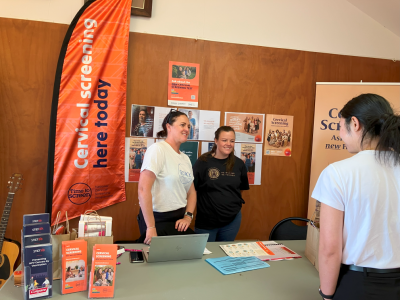
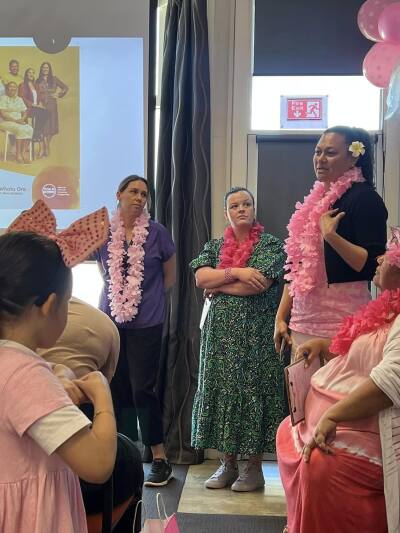
Images are from two health days where community health care providers talked to attendees about screening and provided on-the-spot screening or bookings. Included is one from Puketeraki Marae (Te Ha o Maru providing screening) and at the OPICG now OPIT (Oamaru Pacific Island Trust) Pink event in 2024.
For more information go to https://info.health.nz/keeping-healthy/cancer-screening?fbclid=IwY2xjawM1qDZleHRuA2FlbQIxMAABHREnTB9QCmJ3m0ZrXoZF0ddpgi5S4FzukA8t5tpZrssBRBvr6caYG8hE7g_aem_kxKBarHHLHNALXokYzoaWQ and here for eligibility https://info.health.nz/keeping-healthy/cancer-screening/cervical-screening/eligibility-for-cervical-screening
View more news